"We have been facing multiple crises for several years now. These are always times when innovation does not actually take place. Instead, innovation that has already been conceived and prepared is implemented," explains renowned food expert Hanni Rützler. In other words, in 2025 there will be no radical innovations or changes from the food trends in 2024 or 2023. But there will be shifts, synergies and interconnected effects. These effects are no less exciting for the entire foodservice industry. In today's Food Report, therefore, the food expert focuses on how the most relevant food trends of recent years support each other. She also illustrates the enormous potential this brings, which can already be used now or will be used in the future. This potential is clearly seen through the many examples she gives from restaurants, hotels or the entire gastronomic sector, agriculture or even commerce.
And this is precisely the approach that sets Hanni Rützler apart. With her Food Report, she has presented solutions to the challenges of our time every year since 2014. Because the world we live in is very complex. While speed is increasing thanks to new digital technologies, security and stability are diminishing. As a result, the ability to embrace and adapt to change is becoming increasingly important for restaurants and businesses in general, rather than rigidly clinging to the past and the status quo. "I think we've talked a lot about problems over the past few years and analyzed them extensively. Now it's time to get to work and implement things," explains Hanni Rützler. In the latest Food Report, she therefore groups current food trends for 2025 into three major themes that show the biggest leaps right now.
The first major food trend cluster includes the topics of health, sustainability and climate protection. Each of these topics has been extensively discussed and analyzed in recent years. For a food trend researcher, then, the combined effects around the theme of meat of the future are almost a classic. It is not just about replacing meat with innovations based on plant proteins - at least not yet. Rather, it is also about the "counter-trend," namely a new appreciation for meat.
Regardless of individual point of view, the trend shows that meat production must evolve. The old paradigm of "faster, cheaper and more" is long gone. "The question now is where meat production makes sense and in which geographic and climatic zones it is less appropriate. This reorientation of agriculture is a painful and intensive process, but we are now seeing some movement," says Hanni Rützler. This development is particularly evident in the changing menus and concepts of restaurants embracing the vegetarian and vegan food trend.
Meat is being reinvented. This is also true of the plant-based food trend. Despite some setbacks from large companies such as Beyond Meat or Impossible Foods, this trend will continue to accompany us for a very long time. In general, technologies for alternative proteins or plant-based substitutes are getting better and better. The selection of raw materials is becoming more diverse and sustainable. And in terms of taste, consistency and senses, people are leaning more and more toward the originals of meat, seafood and milk. This is especially true for extensively produced branded products, which tend to be more expensive.
In the Food Report 2025, the trend researcher criticizes the fact that retailers are now entering the market with cheaper private brands. But these usually fail to impress in terms of taste, appearance and smell, and often contain many additives. "In my opinion, this is happening too fast and is detrimental to quality development," she explains. This means that the market is considered saturated faster than expected, which in turn can inhibit further innovations and reduce product diversity. This can lead to qualities that are not yet optimal. There is also a risk that they may not only appeal less to customers, but even deter them.
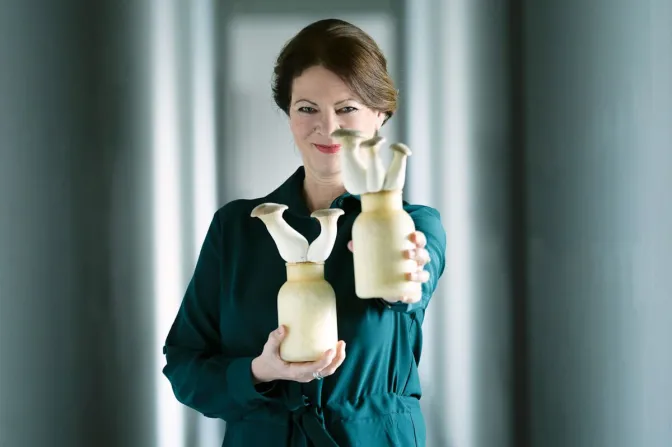
In the medium term, therefore, the future probably lies with plant-based protein products (including mushrooms and algae). They are seen as stand-alone foods, expanding the product range rather than only as protein substitutes for meat, seafood and milk.
The second major trend cluster in the Food Report 2025 includes two topics that at first glance seem contradictory: regionalization and globalization. The latter, however, is a megatrend. "This has been increasing for decades. This is quite unusual, and people have been wondering for a while when globalization will slow down," says Hanni Rützler. She adds that without globalization, there would be no food safety. However, it now seems that globalization is slowing down. Consumers no longer just want to try all the international flavors, products and dishes. They also increasingly focus on the quality they can expect from food and where the food should come from. The strongest drivers behind this development are war on the one hand and climate change on the other.
Whether in cities or rural areas, many restaurant owners, chefs and hosts today are taking the time to build a network of local producers and make it transparent to everyone on the menu. "It's an opportunity to stand out from other, more price-oriented, culinary offerings and develop your own profile."
According to the expert, guests appreciate this and are willing to spend more money on quality and sustainably produced food despite inflation. Hanni Rützler attributes this to the fact that more people are cooking at home, which has raised expectations. "Guests are not going out to eat just to be full as quickly as possible. They want to be inspired, to feel good, to experience something. It doesn't always have to be the most expensive meat - a plant-based dish, a culinary side dish or the use of unique spices also have their charm and can generate joy." This poses problems for some kitchens. At the same time, however, it also presents enormous opportunities for the gourmet sector. And regardless of whether there will be future de-globalization or renewed re-globalization, ecological sustainability in professional kitchens and transparency within the supply chain will remain in the long term.
"Waste is an invention of the industrial age," is a quote from Swiss professor Tilo Hühn of the Zurich University of Applied Sciences (ZHAW) used in the Food Report 2025. And in fact, food used to be valued in a very different way than it is today. Back then, this was due to poverty. Today, food trends such as Zero Waste or Circular Food focus on encouraging an environmentally friendly approach to eating and cooking, as well as correcting the huge amount of food waste and tons of packaging material that has been thrown away in recent decades.
Today, there are even complete zero-waste restaurants that make this trend the core of their concept. Hanni Rützler explains: "We are re-identifying resources, so to speak, and this is also, but not exclusively, about saving and efficiency. Because the topic of food waste can also give a culinary boost to the kitchen, and that's where a lot is happening right now." Waste is no longer seen as garbage, but as a starting product for something new. Sustainable food trends and concepts such as nose-to-tail and leaf-to-root are having a big impact, especially in higher-end gastronomy.
The motivation behind this, however, is not to prevent waste. Instead, the aim is to use all ingredients - whether potato peels, fish peels or bread scraps - in dishes or at least preserve them using traditional or modern methods of preparation. Hanni Rützler believes fermentation offers great potential for the future. Restaurant owners who think about food from the beginning and implement circular food concepts can also score points especially with their guests.
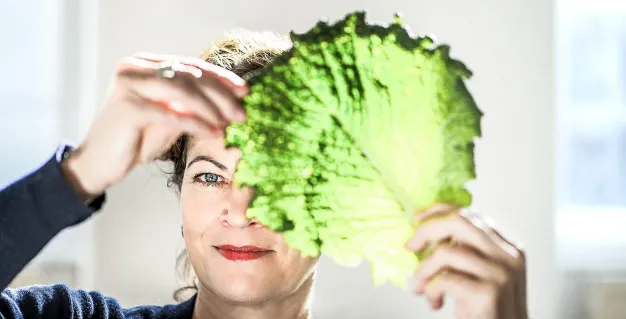
There is a demand for environmentally friendly cooking and eating, and not for nothing is gastronomy seen as a pioneer here. Rützler also confirms this: "Chefs are characterized by the fact that they think very consciously about what they cook and what they cook with. Above all, it takes know-how, craftsmanship and creativity to stand out. After all, everyone can use a small part and throw away the rest."
Hanni Rützler's approach to work differs from many other trend and food studies, from the agencies or influencers who hurl their opinions into the world, especially thanks to social media. The trend researcher does not analyze short-lived phenomena or hypes that are already forgotten tomorrow. Instead, she recognizes, names, evaluates and interprets the most important developments to which gastronomy and the entire food industry must adapt and prepare. Food trends are a special tool for this purpose. Because they visualize the future, even if it is not yet perceived by the public. That also means: Because they offer restaurants, hotels and other food service and gastronomy companies the opportunity to actively shape food culture instead of being overwhelmed by change.
For more than 20 years now, the Austrian author has examined the subject of nutrition from a variety of perspectives. And has continued to do so in the latest Food Report. In doing so, she not only draws on her in-depth expertise. This expertise includes studies in food science, psychology and sociology and food technology. She also relies on years of experience and a rock-solid instinct for trends yet to emerge.
Digital technologies and artificial intelligence cannot compete with this. At least, not yet. Hanni Rützler says, "Personally, I find AI very exciting because it gives us access to millions of data sources. It makes it very easy to measure and understand concepts here and now. You can see what products are on the market worldwide, where they are. But you can't see how they will develop and what this means for the market. Again, there is certainly potential for further development, but we are not there yet."
Photo credits:
Nicole Heiling
David Payr